How to Verify B2B Email and Phone Contacts Before Outreach
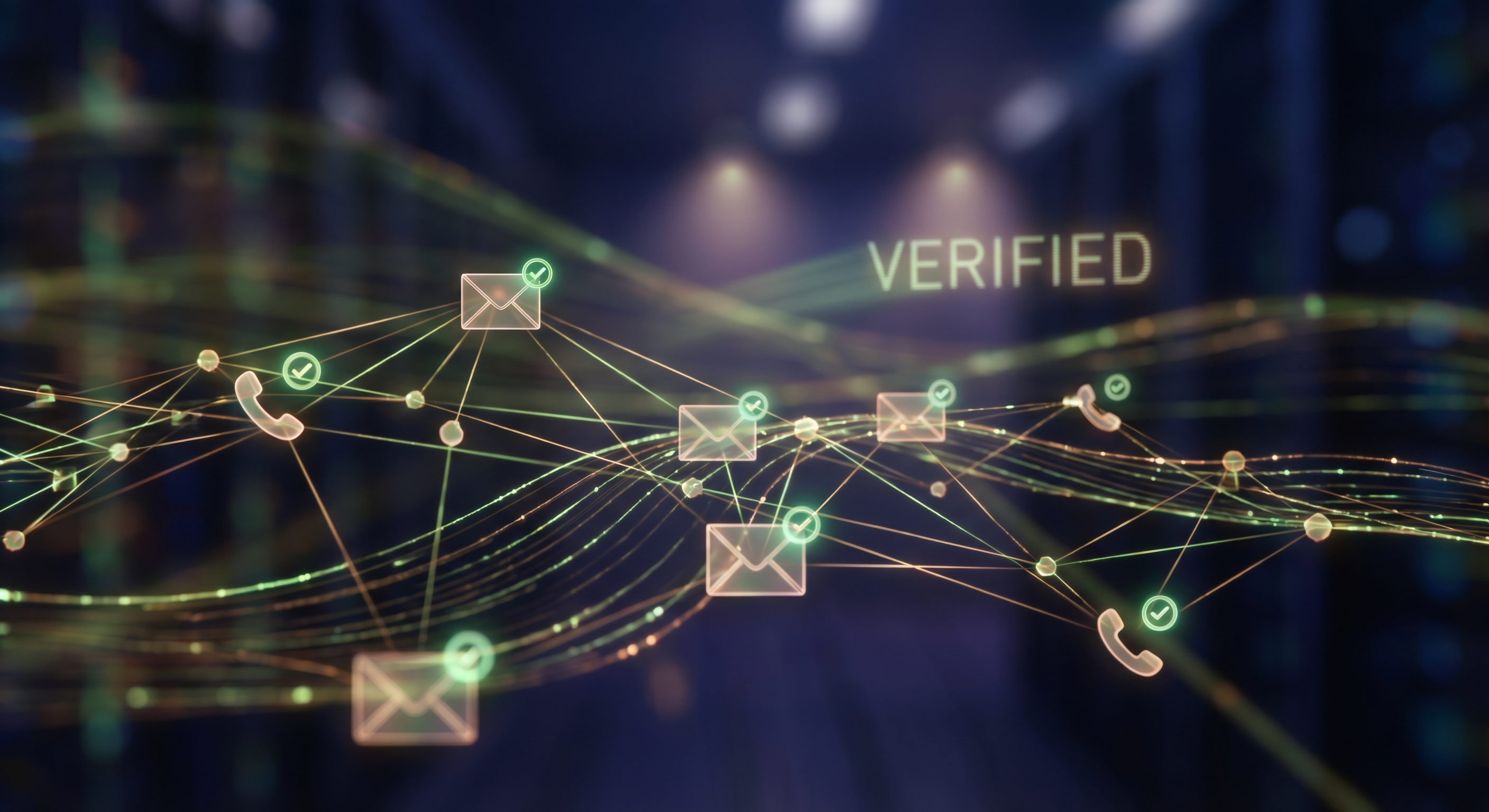
Signal analysis complete. ValiReach qualification intelligence — verified against live B2B data sources.
"Contact verification is one of the most overlooked steps in B2B outreach. Here's what verification actually checks, why it matters, and how to make it part of your lead generation workflow."
Unverified contacts are one of the most common causes of poor outreach performance — and one of the least discussed.
Most conversations about B2B outreach focus on messaging, targeting, or channel mix. Contact quality gets treated as a data problem to solve elsewhere, usually after the lead arrives. By then, the damage is already done: sequences are sending to addresses that don’t exist, phone numbers that don’t connect, and contacts who left the company six months ago.
This covers what contact verification actually checks, why it matters for deliverability and sender reputation, and how to make it a non-optional step in your lead generation process.
What unverified contacts actually cost you
Hard bounces are the most visible problem. When you send to an address that doesn’t exist, the mail server returns a hard bounce, and email providers track those. As your bounce rate climbs, inbox placement drops. Your domain starts getting filtered to spam even for valid contacts.
Blacklisting is the worst case. High bounce rates from a domain or IP can trigger placement on email blacklists, which blocks outreach from that address entirely.
The third cost is subtler but real: once your team learns that the contact list is unreliable, they start adding manual verification steps before using any lead. That overhead compounds over time.
Email databases decay faster than most people expect. According to HubSpot’s research on B2B data, email list decay runs roughly 22% per year under normal conditions. An address that was valid 18 months ago has meaningful odds of being wrong today. A “verified” badge on an old database record means it was valid when it was last checked — not now.
What verification actually checks for email
Email verification is not a single check. There are several layers, and they tell you different things.
Syntax validation confirms the address follows valid formatting — the basic filter. MX record lookup confirms the domain has valid mail exchange records and is set up to receive email at all. SMTP verification is where it gets meaningful: the verification tool contacts the mail server directly and asks whether that specific mailbox exists, without sending a message. That’s the most reliable check you can run without actually sending.
Risky and disposable detection flags temporary email addresses, role-based aliases like info@ or support@, and known spam traps. These are technically deliverable but useless for prospecting. And catch-all detection is something you shouldn’t skip: some domains accept all incoming email regardless of whether the mailbox exists. If you SMTP-verify an address at a catch-all domain, it comes back valid even if nobody real is on the other end.
What verification checks for phone
Phone verification has its own layers. Format validation confirms the number is formatted correctly for the claimed country and region. Line type identification tells you whether it’s a mobile number, landline, or VoIP — which matters for calling strategy. An active line check confirms the number is currently active. And contact association confirms the number connects to the person, not just the company’s main switchboard.
This last one trips up teams that use databases without thinking about it. A verified company phone number is not a verified contact phone number.
What most tools skip
Most contact databases provide email addresses and phone numbers. Some include a verification flag. But the verification quality varies significantly, and most don’t re-verify after records are indexed.
Verification at the point of delivery — when the lead reaches you — is more accurate than verification at the point of indexing. If a database verified a contact 18 months ago and hasn’t re-checked since, you’re getting stale data with a “verified” badge on it.
Building verification into your workflow
The principle is simple: verification should happen before any lead enters an outreach sequence, not during or after.
If you’re building your own verification layer: use a primary email verifier (ZeroBounce, NeverBounce, and Debounce are commonly used), flag risky and catch-all emails separately rather than deleting them — they may still be usable through different channels — use a carrier lookup API for phone verification before scheduling calls, and reverify contacts older than 90 days before adding them to active campaigns.
If you’re using an AI lead generation platform: check whether verification is built into lead delivery or is a separate add-on you manage. The distinction matters. Platforms that verify as part of the qualification step save significant downstream work and reduce the chance that verification gets skipped under time pressure.
How ValiReach handles this
ValiReach verifies contacts at the point of lead generation, before a lead is delivered. Email addresses are checked against live mail servers. Phone numbers are validated for activity and line type. A lead with a failed email verification but a usable phone number is still delivered with the phone as the primary contact method. A lead with no usable contact is flagged and not delivered.
Contacts that reach your queue are ready to sequence. No additional verification step required.
For context on how contact verification fits into the broader lead qualification process, how AI lead qualification works covers what happens from signal discovery through to a delivered lead. And if you’re running an agency, lead generation for agencies covers why pre-delivery verification matters particularly in client-facing contexts.
The short version
Verification is a prerequisite, not an optimization. The three most important checks: SMTP verification on email addresses to confirm the mailbox exists, catch-all detection to flag domains that accept all addresses regardless of validity, and active line verification on phone numbers.
Run these before outreach starts. Not after a bounce.
ValiReach includes contact verification in every lead. Start free.
Frequently Asked Questions
What are the core checks in email verification?
The post outlines syntax validation, MX lookup, SMTP mailbox checks, and risk checks like disposable, role-based, and catch-all handling.
Why does catch-all detection matter?
Catch-all domains can accept mail regardless of mailbox validity, so SMTP checks can look valid even when no real person is reachable.
When should contact verification happen?
Verification should happen before a lead enters an outreach sequence, not after bounces or failed calls.
How does ValiReach handle failed contact verification?
This post states that unusable contact outcomes are flagged and leads without usable contacts are not delivered as outreach-ready records.
Contact verification is one of the most overlooked steps in B2B outreach. Here's what verification actually checks, why it matters, and how to make it part of your lead generation workflow.— ValiReach Intelligence Dossier #008
Access the Full Intelligence Suite
See how ValiReach qualifies and verifies leads for your business. Get 2 AI-qualified leads free — no credit card required.
Start Free — Get 2 Qualified Leads